Shivaram Rajguru 1908 — 1931 · Archive
Section 04 · Chronology

The historical
timeline

Thirty-three dated entries covering Rajguru's life and the events that surrounded it. Each entry carries its context rather than a bare line; eight of them open further into detail. Entries labelled “national context” set the wider political scene he was moving through.

Span
1908 — present
Entries
33
Key date
17 December 1928
Key date
7 October 1930
Key date
23 March 1931
Chronology Life and Context 1908 — 2013

From a house on the Bhima
to a memorial on the Sutlej

1908 24 August · Khed, Pune district

Shivaram Hari Rajguru is born

Born into a Marathi Deshastha Brahmin family in a house near the Bhima river at Khed, in the Bombay Presidency. His parents were Hari Narayan Rajguru and Parvati Devi; he had an elder brother, Dinkar. The town is today called Rajgurunagar.

The surname is an inherited office rather than a family name: rajguru means the preceptor or spiritual teacher to a ruler, and family tradition traces the line to ancestors who held that position under the Maratha court. By 1908 the office and its income were long gone, leaving a household with the expectations of learning and none of the means.
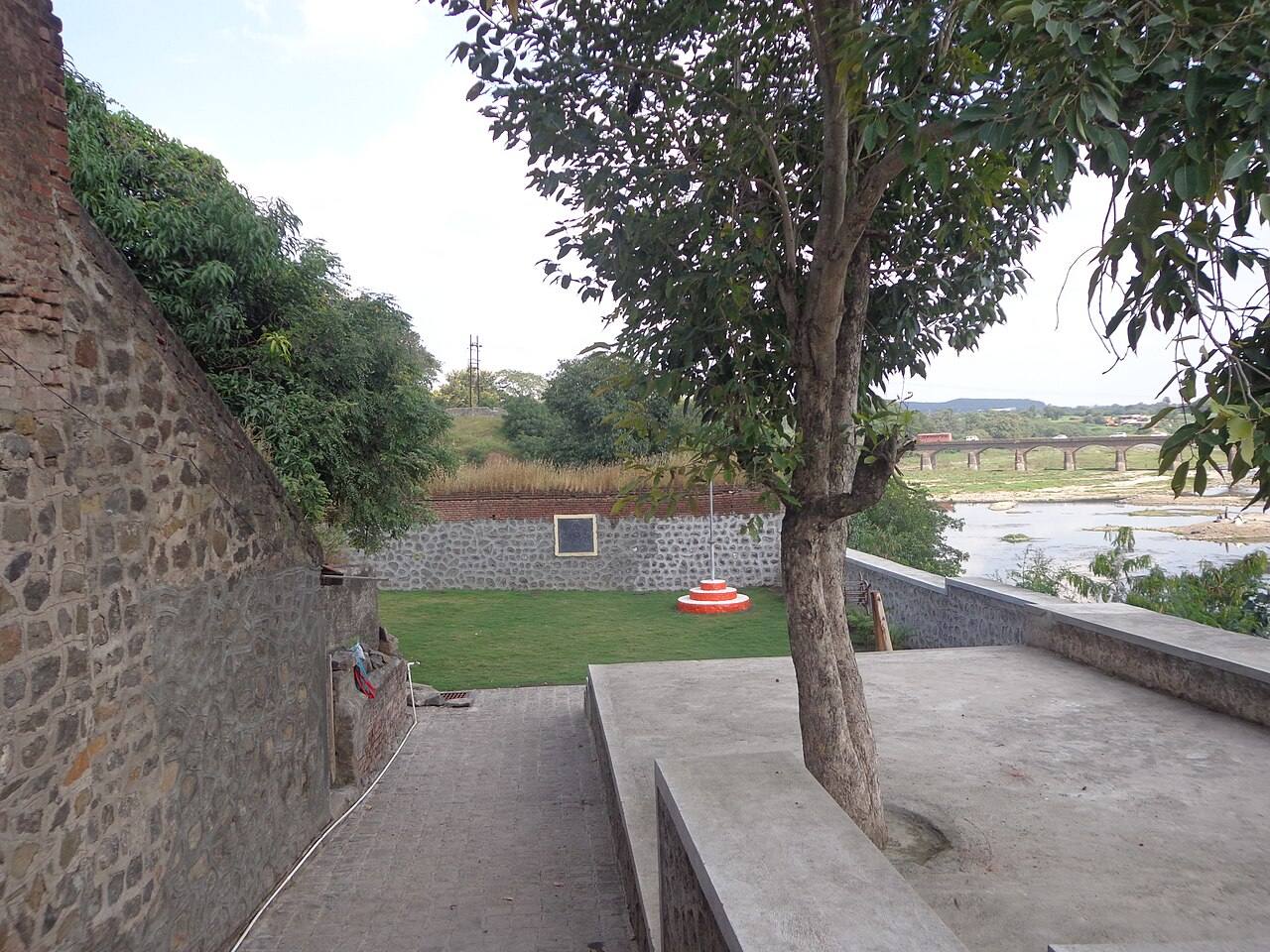
The Rajguru Wada memorial at Rajgurunagar with stone walls, a lawn, a flag base and a plaque, overlooking the Bhima river
Pl. 01

Rajguru Wada — the ancestral house at Rajgurunagar, on the bank of the Bhima, maintained today as a memorial.
1914 Approximate · Khed

The death of his father

Hari Narayan Rajguru dies when Shivaram is about six. The household passes to his mother and elder brother, and the family's already narrow means narrow further. This is the event that shapes the rest of his childhood.

1919 National context · 13 April

Rowlatt Act and the Jallianwala Bagh massacre

Wartime emergency powers are extended into peacetime; protests follow; troops fire on an enclosed crowd at Amritsar. Rajguru is ten. For the generation immediately above him, the massacre settles the argument about the nature of British rule.

1920 National context · 1920 – February 1922

Non-Cooperation, and its suspension

Gandhi's Non-Cooperation Movement draws millions into political life. After a crowd burns a police station at Chauri Chaura in February 1922, the movement is called off. The withdrawal leaves a cohort of younger activists convinced that mass agitation had been stood down at its high point.

1921 Approximate · Khed and Pune

Schooling, and the Seva Dal

Primary education at Khed; secondary study at the New English School in Pune — an institution founded in 1880 by Tilak, Agarkar and Chiplunkar as a deliberately Indian-run alternative to mission and government schools. At Pune he joins the Seva Dal, the Congress volunteer corps: the earliest documented political act of his life.

1924 Approximate · Varanasi

He leaves home for Varanasi

Still in his early teens, Rajguru leaves Maharashtra alone for Varanasi, more than a thousand kilometres away. There he studies Sanskrit and Hindu scripture, reads in the city's libraries, attends public debates, and trains at an akhada run by the Bharat Seva Mandal.

Varanasi is where the two halves of Rajguru's formation meet. The classical education gave him a discipline; the akhada gave him the physical capability that his comrades later relied on; and the student quarter gave him his first contact with the revolutionary underground of northern India. Every account of his politics begins here.

It is also the point at which the biographical record thins to almost nothing. We know he went, we know roughly what he did, and we do not know what he read, whom he lived with, or how he supported himself beyond the general statement that he taught.

1924 National context · October

The Hindustan Republican Association is founded

Founded by Sachindra Nath Sanyal, Ram Prasad Bismil, Jogesh Chandra Chatterjee and others, with a written constitution and a declared republican aim. It is the direct ancestor of the organisation Rajguru will join.

1925 National context · 9 August

The Kakori train action

H.R.A. members stop a train near Kakori in the United Provinces and seize a government treasury consignment. The prosecutions that follow break the organisation.

Some accounts, including entries in widely used reference works, place Rajguru among the participants at Kakori. He would have been sixteen, and most detailed chronologies of his life put his entry into organised revolutionary work later, after he had settled at Varanasi.

The claim is repeated frequently; the evidence for it is thin, and he was not among those charged in the Kakori proceedings. This archive records the claim and marks it as unresolved rather than adopting or suppressing it.

1927 National context · December

The Kakori executions

Ram Prasad Bismil, Ashfaqulla Khan, Roshan Singh and Rajendra Lahiri are executed. For the surviving membership these hangings are both a warning and a demonstration of what a political trial could be made to mean.

1927 National context · November

The Simon Commission is appointed

London appoints a statutory commission on India's constitutional future with seven members and no Indian among them. Protest is immediate and nationwide; the slogan “Simon, go back” follows the commission from city to city after its arrival in February 1928.

1928 September · Feroz Shah Kotla, Delhi

The H.S.R.A. is constituted

Delegates meet in the ruins of Feroz Shah Kotla and reconstitute the H.R.A. as the Hindustan Socialist Republican Association, with a central committee and a military wing under Chandra Shekhar Azad. Rajguru belongs to the military wing under the party name Raghunath.

1928 30 October · Lahore

The lathi charge on Lala Lajpat Rai

The Simon Commission reaches Lahore. A protest march led by Lala Lajpat Rai meets a police cordon. Under the direction of Superintendent James A. Scott, police make a lathi charge; Rai is struck about the head and chest and addresses a meeting that evening despite his injuries.

1928 17 November · Lahore

Lala Lajpat Rai dies

Rai dies of a heart attack. His doctors hold that the injuries hastened his death; the government denies a connection. In Punjab the denial is not accepted, and the H.S.R.A. resolves on a response.

1928 17 December · District Police HQ, Lahore

The shooting of J. P. Saunders

The plan is to shoot Superintendent James A. Scott. Jai Gopal, posted to identify the target, gives the signal when a young officer leaves the building on a motorcycle. Rajguru fires first; Bhagat Singh fires further shots at close range. The officer is Assistant Superintendent John P. Saunders — not Scott. Head constable Chanan Singh, who gives chase, is shot dead by Chandra Shekhar Azad. The party escapes through the grounds of the D.A.V. College.

Saunders was about twenty-one and still on probation. He had had no part in the events of 30 October. The killing was a case of mistaken identity and the H.S.R.A. never claimed otherwise.

The following day, printed notices appeared across Lahore over the signature “Balraj”, commander-in-chief of the H.S.R.A. They acknowledged the killing, tied it to the death of Lala Lajpat Rai, and expressed regret at having had to kill a man while insisting that he was part of an order which had to be ended.

Chanan Singh, the Indian head constable killed during the escape, is very often omitted from popular retellings of this episode. He should not be.

1928 Late December · Lahore to Howrah

The escape from Lahore

Bhagat Singh cuts his hair and beard and leaves Lahore by train in European dress, accompanied by Durgawati Devi posing as his wife and carrying her infant son, with Rajguru travelling as their servant. Rajguru afterwards separates from the party and moves alone through central India. He will remain at liberty for nine and a half months.

1929 8 April · Central Legislative Assembly, Delhi

The Assembly bombs — without Rajguru

Bhagat Singh and Batukeshwar Dutt throw two low-intensity bombs into an empty part of the chamber, scatter leaflets, and make no attempt to escape. They are sentenced to transportation for life on 12 June 1929. Rajguru had no part in this action, though popular accounts routinely merge the two episodes.

1929 April · Lahore and Saharanpur

The raids, and the first approvers

Police raid the organisation's bomb factory at Lahore and premises at Saharanpur. Sukhdev Thapar, Kishori Lal, Jai Gopal and others are taken. Several arrested members subsequently turn Crown witness, among them Jai Gopal and Hans Raj Vohra — whose evidence makes a murder charge in the Saunders case possible.

1929 From mid-June · Punjab jails

The prisoners' hunger strike begins

Undertrial prisoners strike for recognition as political prisoners: decent food and clothing, access to books and newspapers, and an end to the distinction drawn between European and Indian prisoners. The strike runs for months and becomes a national news story in its own right.

1929 10 July · Borstal Jail, Lahore

The Lahore Conspiracy Case opens

Committal proceedings begin inside Borstal Jail with twenty-eight accused named. The accused treat the court as a platform — slogans, songs, and statements aimed past the bench at the newspapers.

1929 13 September · Lahore

Jatindra Nath Das dies on the sixty-third day of his fast

Das dies in custody. His body is carried in procession through Lahore and then to Calcutta, where enormous crowds meet it. His death moves Indian opinion on the treatment of political prisoners in a way that the Saunders killing never had, and it changes the public standing of the accused before their trial has properly begun.

1929 30 September · Pune

Rajguru is arrested

After nine and a half months at liberty, Rajguru is arrested at Pune. A pistol and fourteen cartridges are recovered. He is taken to Lahore to be tried with the others. He is twenty-one years old, and he will not be free again.

The recovery of a weapon mattered enormously to the prosecution. Approver testimony placed Rajguru at the scene at Lahore; physical evidence of a pistol in his possession gave that testimony corroboration of a kind the defence found very hard to answer.

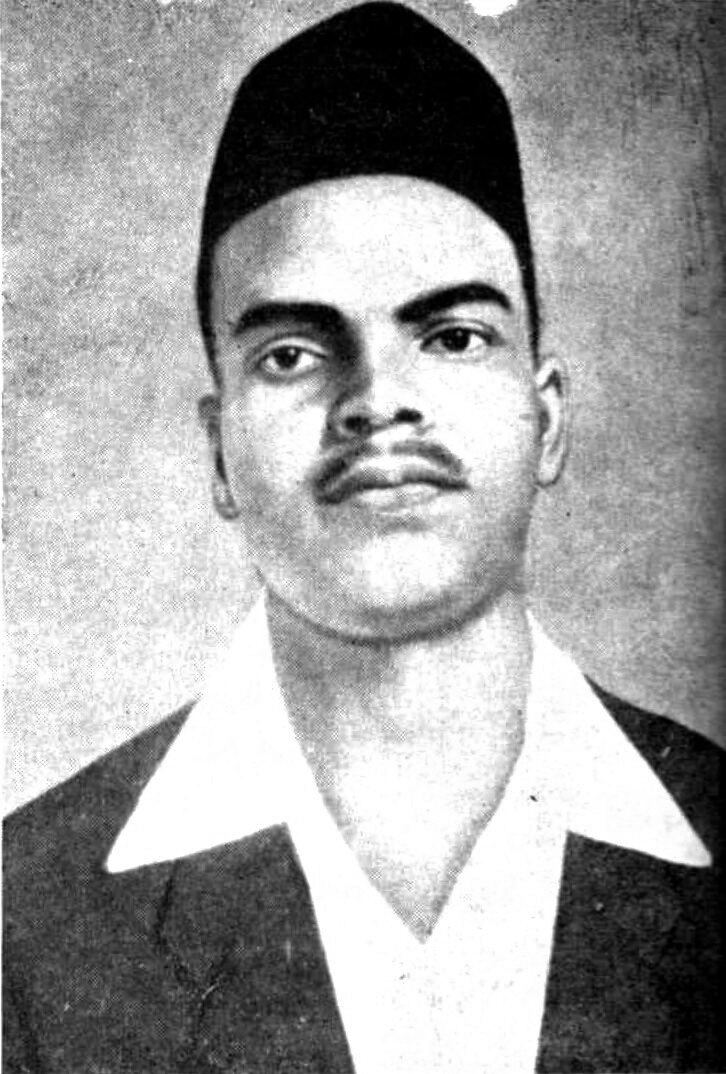
Archival photographic portrait of Shivaram Hari Rajguru wearing a dark cap and light collar
Pl. 02

The photograph circulated during the manhunt of 1929.

1929 5 October · Lahore

The hunger strike ends

Bhagat Singh ends his fast after some 116 days, following partial concessions on prison conditions. The strike has cost one life and won the prisoners a public standing the government cannot now undo.

1930 1 May · Government of India

The Special Tribunal is created by ordinance

With the trial obstructed and prolonged, the Viceroy, Lord Irwin, promulgates an ordinance establishing a three-judge Special Tribunal. It may proceed in the absence of the accused, and there is no appeal except to the Privy Council in London.

An ordinance is executive law-making. The tribunal that tried and condemned the accused was therefore created by the executive, without the legislature, for this prosecution — and the ordinance under which it was created lapsed after roughly six months, while its judgment stood.

The tribunal was also reconstituted during its life after a dissent from within the bench. Contemporaries across Indian political opinion — including many who rejected the accused's methods entirely — objected to the procedure on principle.

1930 7 October · Lahore

Judgment: three sentences of death

In a judgment running to some three hundred pages, the tribunal sentences Bhagat Singh, Sukhdev Thapar and Shivaram Rajguru to death by hanging. Others receive transportation for life or fixed terms of imprisonment; several are acquitted.

1931 February · Judicial Committee of the Privy Council, London

The appeal is dismissed

The defence challenges the validity of the ordinance that created the tribunal. The Privy Council dismisses the appeal. The last legal avenue closes, and the case becomes a question of executive clemency alone.

1931 27 February · Alfred Park, Allahabad

Chandra Shekhar Azad is killed

The H.S.R.A.'s commander-in-chief dies in a gun battle with police. With Bhagwati Charan Vohra already killed in May 1930 and the leadership imprisoned, the organisation is effectively finished three weeks before the executions.

1931 5 March · Delhi

The Gandhi–Irwin Pact

Gandhi and the Viceroy conclude an agreement suspending civil disobedience in return for the release of political prisoners and other concessions. Gandhi raises the three death sentences with Irwin during and after the negotiations. Commutation does not come, and the omission becomes one of the most bitterly debated questions of the period.

1931 23 March · Lahore Central Jail

The execution

Fixed for the morning of 24 March, the executions are carried out instead on the evening of 23 March 1931, at about seven o'clock — brought forward by roughly twelve hours and moved from dawn to dusk in anticipation of public disorder. Bhagat Singh was 23. Sukhdev Thapar was 23. Shivaram Rajguru was 22. Contemporary accounts describe the three walking to the scaffold together and calling out Inquilab Zindabad.

The bodies were not returned to the families. They were removed at night through a breach cut in the rear wall of the jail, carried towards Ferozepur, and cremated in haste near the village of Ganda Singh Wala on the banks of the Sutlej; the remains were consigned to the river. The site is today the National Martyrs Memorial at Hussainiwala.

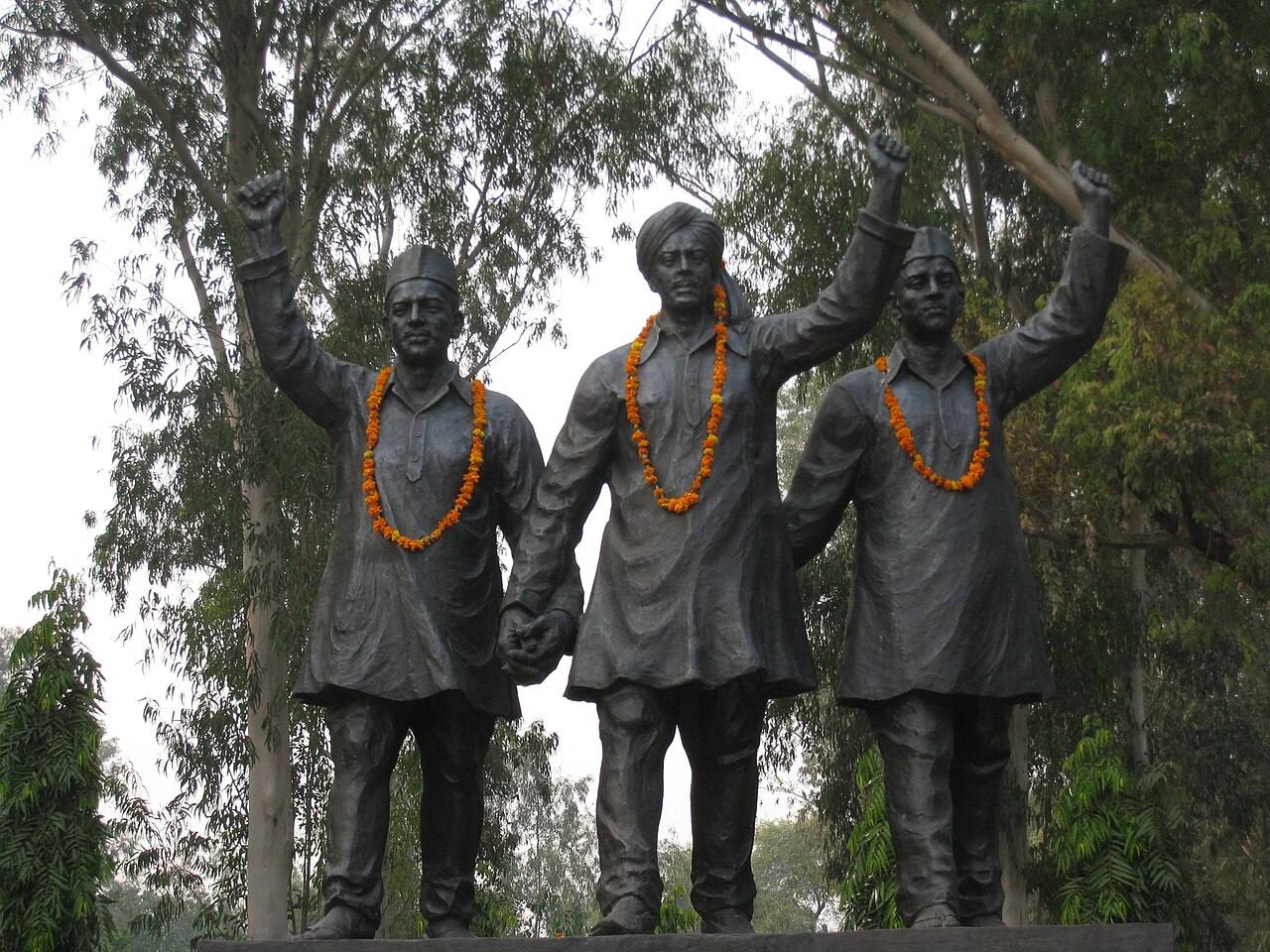
Garlanded bronze statues of Bhagat Singh, Rajguru and Sukhdev with raised fists among trees
Pl. 03

The three are commemorated together at memorial sites across India.

1931 Late March · Karachi

The Congress meets at Karachi

The annual session of the Indian National Congress opens days after the hangings and is dominated by them. The Congress records its admiration for the courage and sacrifice of the three men while restating its own disassociation from political violence — a formulation that captures exactly the mixture of grief and disagreement the executions produced.

After
1947
Khed, Pune district

Khed becomes Rajgurunagar

His birthplace is renamed in his honour. The family's ancestral house — the Rajguru Wada, roughly 2,788 square metres on the bank of the Bhima — is maintained as a memorial. The National Martyrs Memorial at Hussainiwala marks the cremation site.

2004 Rajgurunagar

The flag at Rajguru Wada

The Hutatma Rajguru Smarak Samiti begins hoisting the national flag at the memorial each Republic Day — an annual observance that has continued since.

2013 India Post

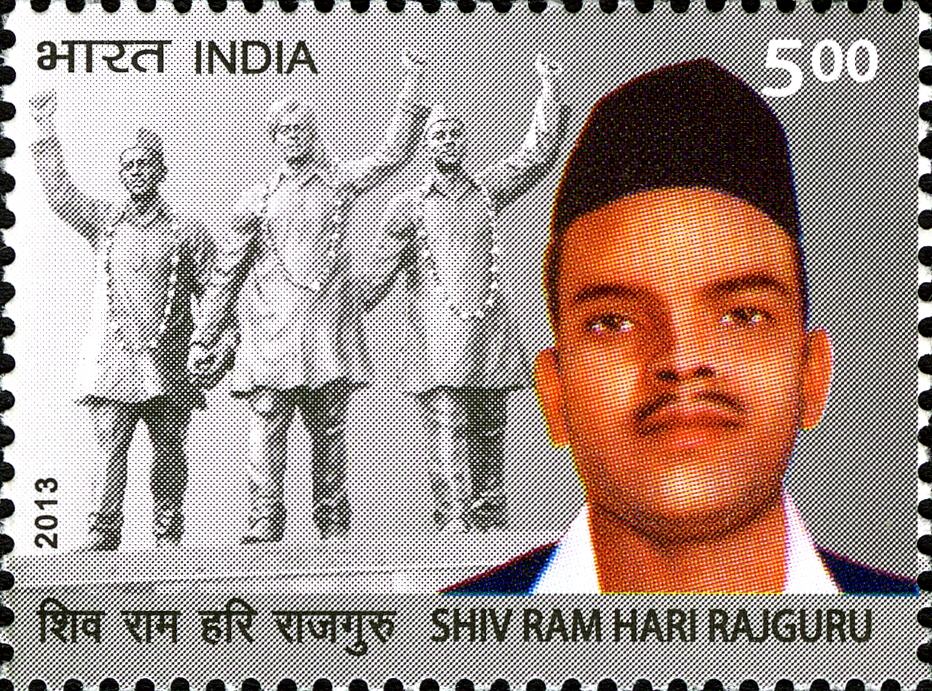
A commemorative stamp

The Government of India issues a ₹5 commemorative postage stamp inscribed “Shiv Ram Hari Rajguru”, showing his portrait beside the memorial statues of the three martyrs.

Indian commemorative postage stamp of 2013 showing Shiv Ram Hari Rajguru's portrait beside the three martyrs' statues, denomination five rupees
Pl. 04

The 2013 stamp. The portrait is derived from the single surviving photograph; the statues behind it are the memorial group.

Now Every 23 March

Shaheed Diwas

Martyrs' Day is observed across India on the anniversary of the executions. Rajguru's name is spoken most on this day and, as one of three, examined least. That imbalance is the reason this archive exists.

On dates and approximations

Dates given as exact are those attested in the standard record. Where a date is approximate — his father's death, his departure for Varanasi, the beginning of his schooling — it is marked “approximate”. The length of the 1929 hunger strike is given as reported in the principal sources, which differ slightly among themselves.